
Chick Wit
On Sale Now
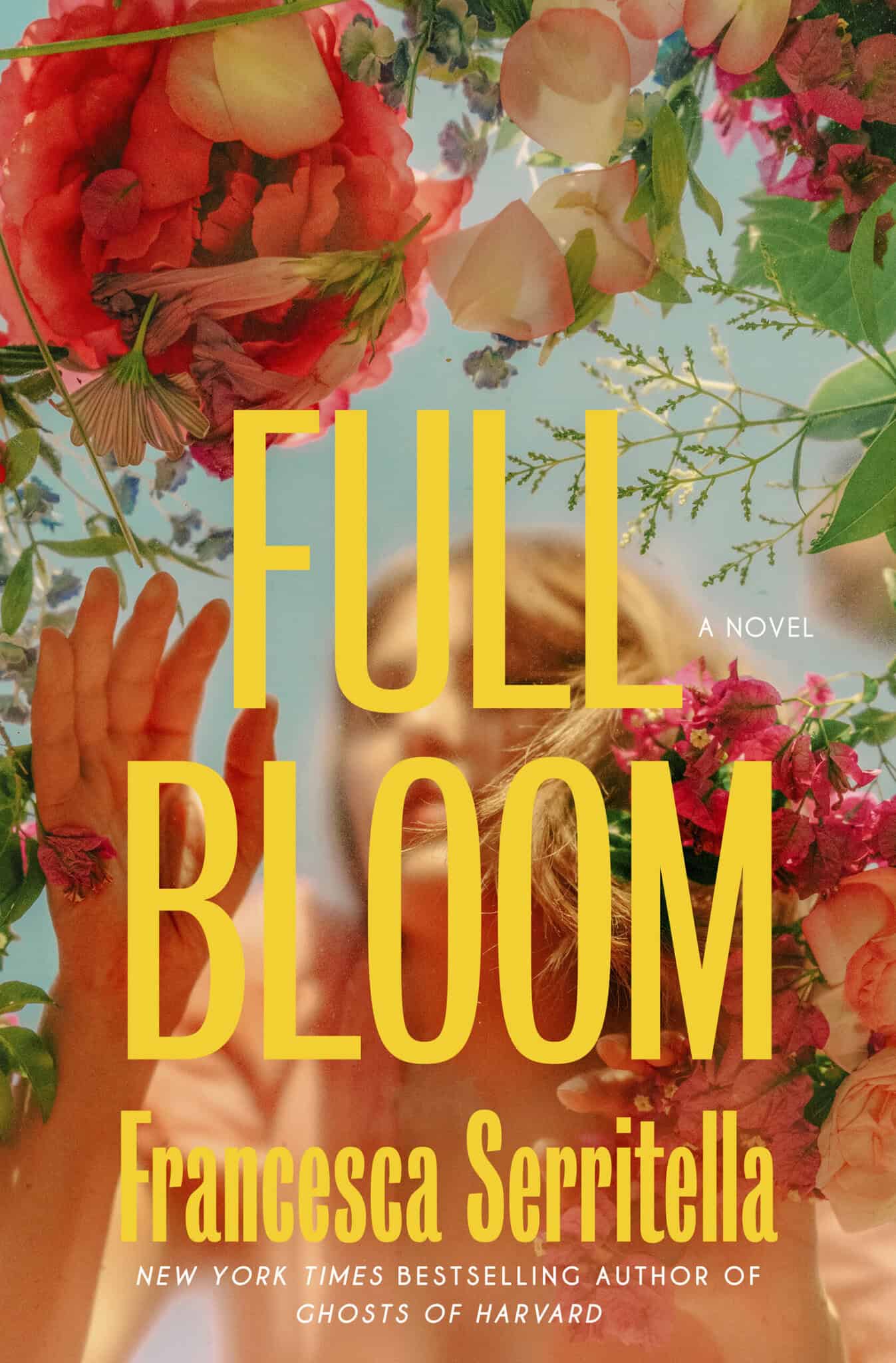
By Francesca Serritella
I was going through a closet at my mom’s house when I spotted an old handbag I felt worthy of rescuing and bringing back to New York. Upon opening it, I found a folded piece of yellow paper inside. It had a list of questions written on it in my handwriting, but that I didn’t remember writing:
“In whose house was he raised? Yours or Barbara’s?”
“How much does he eat, how often?”
“Introducing to other dogs?”
I pulled out the next items: two tickets to Dressage at Devon 2008.
Suddenly, my heart swelled at the memory.
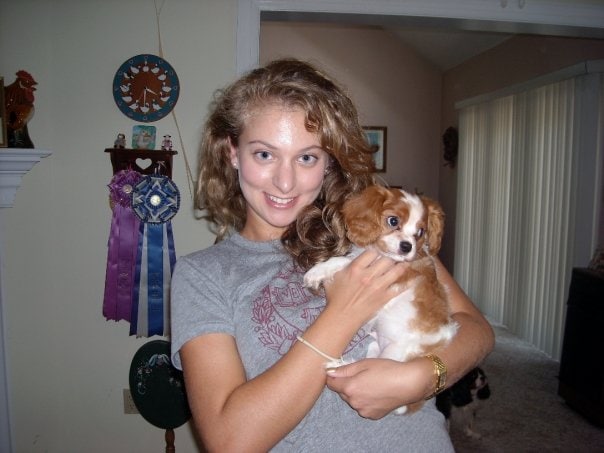
I was transported to September 2008, when I first met Pip as a puppy. I had written these questions down, because I was so nervous and excited, I was afraid I would forget to ask them.
Pip was called “Nino” back then, full name Holyoke’s Pinot Nino Grigio. He’d been carefully and responsibly bred to be a show dog, but he was available for adoption because of the unfortunate fact that he had only one descended testicle.
Unfortunate for the American Kennel Club—extremely fortunate for me.
I was fresh out of college, and I remember I intentionally wore my Harvard t-shirt and pearl earrings—a twenty-two-year-old’s idea of a confidence-inspiring outfit—because I wanted to be seen as a qualified and trustworthy potential adopter. I rang the breeder’s doorbell and heard a chorus of barking within. She opened the door holding a cherub in the form of a dog—a puppy so plump, fluffy, and perfect, I forced myself not to look directly at it.
That can’t be him, I warned myself. He’s too tiny and cute, she would never part with that one, don’t even hope.
But it was my Pip. My little baby. My best friend I hadn’t met yet.
I don’t remember whether or not I bothered asking those questions. I had every answer I needed watching this precious puppy chase after a fallen leaf, tumble in the grass, and present his petal-pink belly for tummy rubs.
As in love as I was that first day, I had no idea the joy Pip would bring me for the next ten years and hopefully more. I can’t imagine life without him.
The sweet nostalgia made me wonder what I’d find inside my other old purses. I’ve always thought time capsules seemed like the coolest idea, but I’d never gone to the trouble of burying one. Now I wondered how many I had waiting for me in my closet back home.
The first one I dug out was a quilted brown bag I hadn’t carried in years. Inside, I found a hotel room key-card, the business card for the Seventh Avenue New York Sports Club, and a Band-Aid.
The Band-Aid made it click—my first apartment-hunting trip to New York City, a marathon weekend of walking cross-town and up staircases—and the souvenir blisters.
Because I was young, dumb, and fun, I brought my new puppy with me on the apartment visits, although I mostly ended up carrying him. Pip was only four months old, still acclimating to the leash, and, as a country puppy, wholly unprepared for the urban bouquet of smells. When I tried to walk him, he would take a few steps then plop down onto the sidewalk in awe.
I remember wishing I could do the same.
Ultimately, I took that apartment near that Seventh Avenue New York Sports Club, although I didn’t make enough money to join. No matter. I got my exercise from taking the stairs to my sixth floor apartment.
Next, I unearthed a canvas, zippered bag I hardly recognized. Inside, it held a worksheet on verb conjugations, tickets to two musei, and Italian international stamps—summer 2006, my study abroad in Abruzzo, Italy. I could almost feel the golden sunlight and taste the briny linguine alle vongole that I ate every day, al fresco, overlooking the Adriatic Sea.
By the end of that summer I was fluent, as proven in a real-life final exam of winning an argument with a hot-headed Roman hotel clerk, but more important than any language skills I gained, that was the summer when I solidified my friendship with the woman who would become my best friend from college to this day. Ten weeks together, fumbling through a foreign country, sleeping in a tiny motel roomwith no air-conditioning, and we didn’t have a single fight—that doesn’t make a friend, that makes a sister.
That trip was where we learned our personalities were perfectly complementary. I carried both of our passports in this handbag, because she’s forgetful and prone to losing things, while I compulsively check and double check that I have everything. Meanwhile, she brought a little whimsy to our adventures. Like on a day trip to Venice, while the other girls on our program spent the evening in an Internet café talking to their boyfriends, my friend had the idea that we should change into our best dresses and go to Harry’s Bar like old movie stars and drink Bellinis.
Or Bellini. They were so expensive, we had only enough Euros for one drink each.
But we were so happy and excited to be there, the wait staff got a kick out of us, and they proceeded to bring us another round of Bellinis and a sampling of every dessert they made, offerto dalla casa, on the house.
I remember two English tourists seated nearby accused us of writing our phone numbers on the bill. They were surprised we were Americans.
“You giggle like British girls,” one said, making us laugh harder.
(And lest you feel too bad for our boyfriends, I’ll tell you I wrote to my college sweetheart every single day, sending old-fashioned love letters to the Air Force base where he was having field training—hence, the International stamps.)
Not every memory in these handbags has been so clear. In a tote bag with a broken strap, I found a printed card from J.Crew.com that read:
“HAPPY BIRTHDAY, STUD! Unwrap this, then I’ll unwrap you 😉 I love you! Xoxo, F.”
I forgot what a clever girlfriend I can be! Although I confess, I also forgot the gift and the stud recipient.
But I’ve only said I love you to three men in my life, and two of them called me by my old nickname, Kiki, so by process of elimination, I figured it out.
And he still wears that shirt I got him.
There was something especially sweet about finding these small mementos: the serendipity, the puzzle of them, the way the memories sneaked up on me. It’s ironic that the most photographed generation has so few physical reminders like these. Now every memory is captured on a smartphone, the image digital and intangible, likely to be forgotten in the Cloud. Forgotten or lost—my laptop crashed in 2010, and I lost all the photos I had taken that summer in Italy. You can’t stumble across an old digital image by accident, unless you count those Facebook Memories that seem only show me pictures of my exes, but there’s little mystery or charm in an algorithm. I’d nearly forgotten the pleasure of having a memory take me by surprise.
So the next time I get the urge to clean out a handbag, I’m going to stop myself.
Because what seems meaningless today could one day be a ticket to a time machine.
Copyright © Francesca Serritella